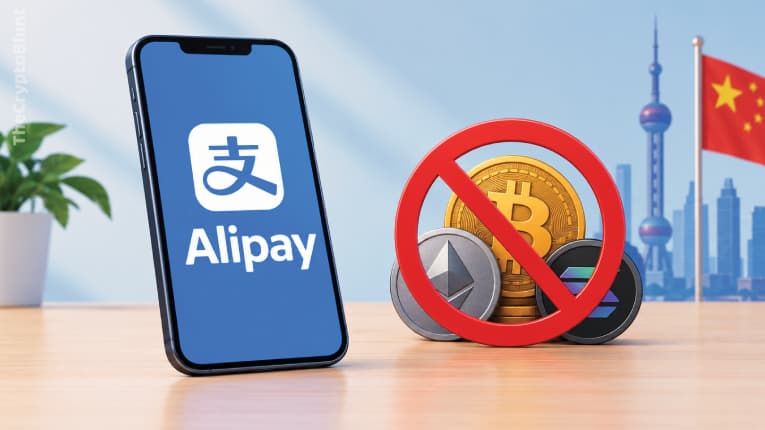
Chinese fintech powerhouse Alipay denied fueling crypto transactions on external platforms shortly after peer-to-peer exchange Peer rolled out a tool through which USDC can be bought using Chinese yuan.
Based on Alipay’s October 28 release, the company refuses to clear virtual currency transactions or related offerings across its network. This statement directly countered Peer’s update that Alipay was being used by customers to settle crypto purchases throughout a beta trial.
“Claims that Alipay enables crypto purchases on third-party platforms are false and unauthorized,” the payment operator noted, advising clients that account safety must be prioritized whenever facing such promotions.
Peer introduced the capability on October 27, outlining a portal where buyers send Chinese yuan to sellers to acquire USDC, while yuan payouts are received by merchants swapping the stablecoin.
Alipay Denies Peer’s Announcement About USDC Payments#
In its October 27 update, Peer framed the Alipay payment method as active in beta while guiding users to its Chinese channel for assistance and guidance. The firm pitched the feature as a means through which USDC deals are settled using standard peer-to-peer transfers.
Via the process, a buyer transfers yuan straight to another user using Alipay. After the seller verifies the payment, USDC is delivered through Peer’s cryptocurrency settlement framework.
This setup avoids demanding Alipay mint USDC or run a crypto exchange. Even so, the fiat stage of digital asset transactions is handled by its payment system, a practice the firm maintains it strictly forbids.
Peer later clarified that no official alliance existed with Alipay. The marketplace described the process as direct user-to-user payments among traders, ensuring its platform was distanced from any formal integration with the Chinese payment service.
Alipay’s pushback arrived about twenty-four hours after the public disclosure. Its warning targeted clients accessing external platforms marketing crypto trades via its app, including options where Alipay access is advertised as an accepted payment choice.
Peer Claims 107 USDC Transactions Were Completed Through Alipay#
Peer stated the transaction model had functioned since August 21, preceding its October beta launch. Throughout those weeks, the exchange tracked 107 finished deals among 45 buyers, with overall trading volume being reported at roughly $7,094.
These metrics reflect activity disclosed by Peer, rather than payment metrics independently verified by Alipay. Considering these figures, average orders of roughly $66.30 were processed by the venue, pointing to modest transaction amounts.
Stay in the loop
Get crypto news before the market moves
Join thousands of investors who read our daily briefing.
No spam. Unsubscribe anytime.
The platform relies on an onchain escrow setup where the seller deposits USDC into a smart contract prior to the deal proceeding. Following fiat verification from the buyer, the stablecoins are released by the contract straight into the buyer’s wallet.
Peer’s outline of the trading structure divides direct yuan transfers among users from onchain crypto movements. The disclosed totals capture activity tied to the beta service, so the total volume of all crypto-linked payments across Alipay is not established by these figures.
The firm launched Chinese-language resources alongside its October update, providing prospective traders instructions through which access to the USDC marketplace is enabled.
China Keeps Strict Restrictions on Cryptocurrency Payments#
Alipay’s stance reflects years of tight regulations surrounding digital asset activity across mainland China. The payment network had earlier built monitoring systems whereby accounts linked to illicit crypto transfers were flagged.
In earlier reports, detailed Alipay’s tracking of crypto-linked transfers, outlining steps through which accounts tied to over-the-counter digital asset trading were restricted.
Chinese authorities tightened regulatory oversight in February 2026 when the People’s Bank of China alongside seven government departments released refreshed cryptocurrency guidelines. Under the framework, activities encompassing virtual asset trading, fiat-to-crypto exchanges, and related financial offerings were categorized as illegal financial operations.
The notice encompassed Bitcoin, Ether, and stablecoins while establishing additional obligations governing tokenized real-world assets. Regulators reiterated that digital currencies lack the legal standing of sovereign money, meaning their circulation as legal tender inside China is prohibited.
During June, the central bank introduced additional anti-money laundering controls through which virtual asset deals, illicit banking channels, and cross-border financial offenses were targeted.
The strategy document detailed joint investigations spanning the central bank, public security agencies, and other state entities. It singled out virtual currencies as tools through which illicit networks conceal financial tracks, ensuring cross-border funds are moved outside regulatory oversight.
Alipay’s October 28 statement reaffirmed its ban on cryptocurrency activities and urged users to exercise caution whenever outside platforms market digital asset deals where its payment accounts are featured.