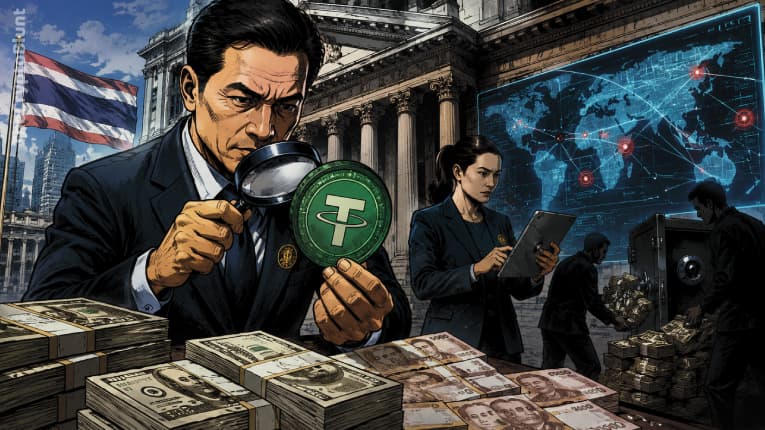
Thailand has been heavily affected by Chinese-linked scam centers, with illicit profits continuing to circulate through the country’s “gray money” economy.
Thailand’s central bank is increasing its oversight of stablecoin transactions as part of a broader campaign to combat money laundering, illicit financial activity, and the country’s growing “gray money” economy.
The Bank of Thailand is collaborating with the country’s Securities and Exchange Commission to review high-volume stablecoin transactions. The effort focuses on USDt (USDT), cash transfers, and currency exchange activities to detect and prevent illicit financial flows.
“The measures we are introducing are not temporary solutions; they require the ongoing implementation of several strategies at the same time,” Bank of Thailand Governor Vitai Ratanakorn said, according to local media outlet The Nation on Saturday.
Thailand is stepping up efforts to curb its “gray economy,” which largely involves cash believed to originate from suspicious sources, including scam call centers that have expanded across the region. Although the size of the gray economy remains unclear, scam-related losses in 2025 may have reached $3.4 billion, alongside an estimated 173 million scam calls and text messages.
Stablecoins have increasingly become a preferred method for transferring large sums of money because they enable near-instant cross-border settlements.
Thailand Expands Crackdown to Cash, Forex, and Gold Transactions#
The initiative will broaden compliance responsibilities for commercial banks across cash networks, currency exchange services, gold bullion trading, and suspicious stablecoin transactions. According to the report, the goal is to prevent regulated institutions from being used to facilitate corruption or support shadow economy activities.
Stay in the loop
Get crypto news before the market moves
Join thousands of investors who read our daily briefing.
No spam. Unsubscribe anytime.
High-value cash transactions will also require customers to declare the source of their funds. Authorities will monitor large exchanges of high-denomination banknotes for smaller bills when no clear business purpose is provided. In addition, cash deposits exceeding 5 million baht ($150,000) must include full disclosure of the funds’ origin.
Thailand has long been viewed as a crypto-friendly destination, but the central bank still prohibits digital asset and stablecoin payments. At the same time, regulations governing crypto businesses have been tightened on a regular basis.
Crypto trading remains legal in Thailand, with the country’s largest exchange, Bitkub, recording around $26 million in daily trading volume. However, nearly 40% of that activity comes from forex trading, with the USDT/THB pair remaining the most actively traded market, according to CoinGecko.
Anti-Scam Crackdown Faces Unexpected Setbacks#
Thailand’s banks introduced broad account restrictions in 2025 and froze nearly three million bank accounts as part of a nationwide crackdown on mule accounts, gray capital, and other suspicious financial activities.
However, the sweeping enforcement action also affected thousands of individuals and legitimate businesses, in what local media at the time described as a “scammer crackdown gone wrong.”