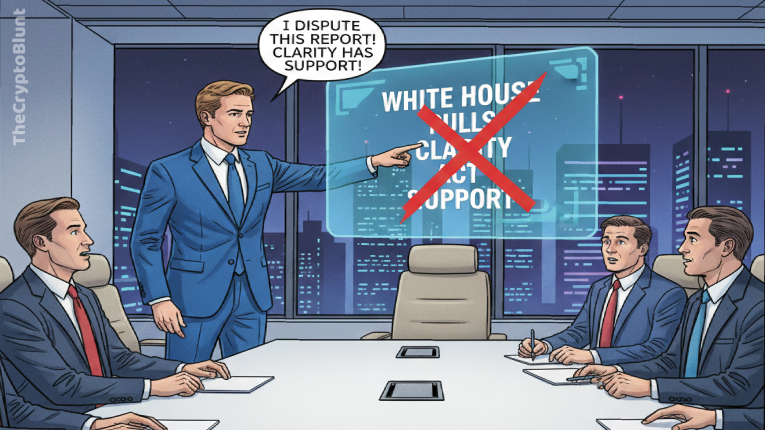
Reports that the White House is pulling support for the CLARITY Act have been pushed back against by Coinbase CEO Brian Armstrong, who stated that talks with the administration remain constructive.
A report suggesting the White House had withdrawn its support was described as inaccurate by Armstrong in a post shared on X on Sunday, Jan. 18.
It was explained by him that the administration had asked Coinbase to explore whether a compromise could be reached with banks, particularly regional lenders, and he said those conversations are now underway.
The bill’s impact on smaller banks was identified by Armstrong as a central issue being discussed.
The reporting by journalist Eleanor Terrett was followed by these comments, as she cited an anonymous source claiming the White House was frustrated by Coinbase’s decision to pull support for the CLARITY Act earlier in January without prior notice.
The move was viewed as a betrayal according to that account, and it risked undermining momentum behind the legislation. Terrett later stood by her reporting after Armstrong’s response.
Dispute Focuses on Stablecoin and DeFi Provisions
Regulatory boundaries for digital assets in the United States are intended to be defined by the CLARITY Act, which covers exchanges, DeFi platforms, stablecoins, and tokenized assets.
Support for the CLARITY Act was publicly withdrawn by Coinbase, citing concerns with the latest Senate draft. Armstrong said the proposed language could limit DeFi activity, restrict tokenized equity products, and block stablecoin issuers from offering yield-like rewards to users.
Concerns were also raised by him regarding expanded government access to financial data and a shift in regulatory authority toward the Securities and Exchange Commission at the expense of the Commodity Futures Trading Commission.
Immediate consequences were triggered by the withdrawal. A scheduled markup session in the Senate Banking Committee was postponed to allow more time for negotiations, slowing the bill’s progress after it passed the House in 2025.
White House Engagement Continues
Despite reports of strain, a breakdown in relations was denied by Armstrong. He described recent talks with the White House as “super constructive” and said the administration is focused on finding a path that balances crypto innovation with the concerns of traditional financial institutions.
Stablecoin yields have been identified as a key sticking point, with banks arguing that crypto-issued returns could draw deposits away from the banking system.
Industry opinion is found to be divided. Some executives have argued that passing a compromised version of the bill would still provide much-needed regulatory clarity, while others believe locking in restrictive language could damage the sector for years.
For now, negotiations are expected to continue, with revised language likely to be discussed in the coming weeks as lawmakers look for a deal that can move forward in the Senate.