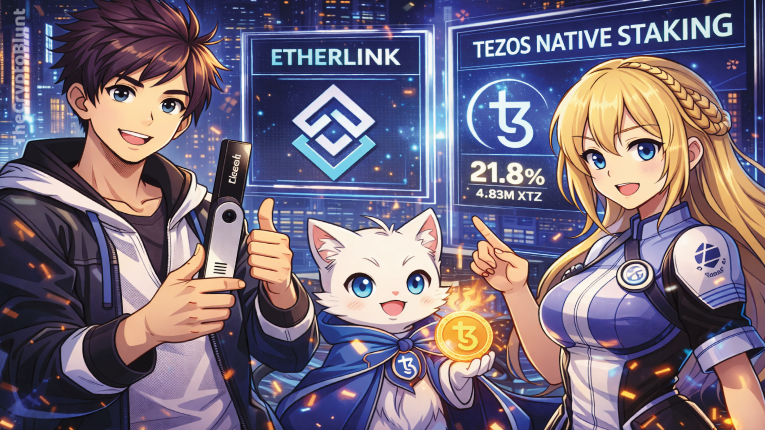
Ledger has deepened its alliance with the Tezos ecosystem by incorporating Etherlink, Tezos’ EVM-compatible smart rollup, into its hardware signers and software interface. Through this update, comprehensive support for the Tezos-based EVM layer is enabled, allowing users to manage assets and interact with decentralized applications under the protection of hardware security.
Ledger Extends Support From Tezos L1 to Etherlink
Ledger has introduced comprehensive support for the Tezos ecosystem, extending its reach from the Tezos Layer 1 to Etherlink, the network’s EVM-compatible smart rollup. This update ensures full compatibility for Etherlink and the tez (XTZ) token across Ledger’s platform—including hardware signers and the Ledger wallet—while ensuring that upcoming native staking features are integrated.
The digital asset security firm has served as a pillar of Tezos engagement since 2019, facilitating delegation via the Ledger wallet with over 10 million tez (XTZ) committed to governance. The introduction of native staking now permits clients to bolster the Tezos network’s security directly while accruing rewards, ensuring that Ledger’s contribution to decentralized involvement is solidified.
Through this update, Ledger participants acquire hardware-mandated “clear signing” for Etherlink-related tez transfers, guaranteeing absolute security. The Ledger Wallet desktop and mobile platforms now provide thorough account administration, encompassing balance monitoring, history logs, and exchange features, through which asset safety is fortified.
In addition to secure storage, participants can effortlessly engage with Etherlink’s burgeoning decentralized finance (DeFi) landscape. Prominent networks such as Curve, Morpho, and Uniswap are now available, alongside trailblazing platforms like Uranium.io, through which tokenized physical uranium and other experimental assets are introduced into protected self-custody frameworks.
This shift is particularly significant for corporate financiers, as hardware-secured clear signing ensures fraud-resistant transfers that satisfy regulatory standards. The sub-second finality and sub-cent costs of Etherlink offer a viable alternative to the high expenses associated with Ethereum, while the network’s stability is reinforced through native staking, allowing institutions to participate in Tezos governance.
Charles Guillemet, the Chief Technology Officer at Ledger, emphasized the necessity of reliability within the sector. “Heightened integration within the Ledger framework was a primary concern,” stated Guillemet. Through the use of hardware-guaranteed clear signing, a sense of assurance is provided to users engaging with DeFi, as they remain certain that their holdings are shielded by Ledger’s strict protection protocols.
Anthony Hayot, who leads DeFi partnerships at Nomadic Labs, remarked that the collaboration renders Tezos and Etherlink holdings more reachable for safety-oriented participants. “By merging Ledger’s hardware-based safeguarding with fluid functionality, ecosystem-wide adoption is driven forward,” Hayot noted.
Through the fusion of EVM functionality, native staking, and corporate-level safety, the Ledger integration establishes Tezos and Etherlink as premier venues for the forthcoming era of blockchain expansion, through which industry leadership is achieved.