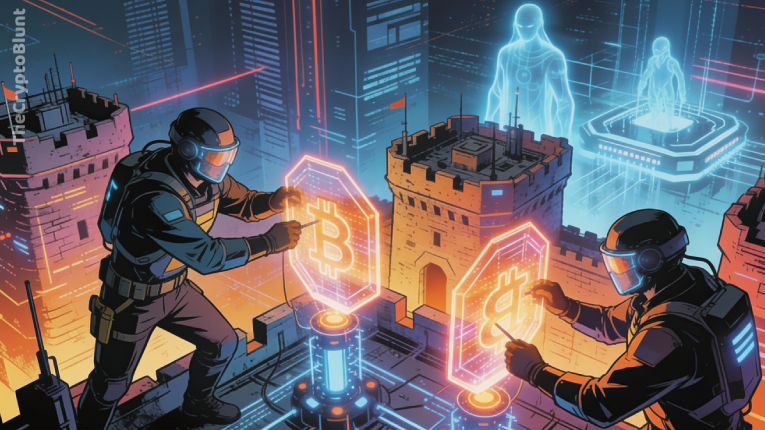
As quantum computing transformed from distant theory to a practical risk in 2025, Solana developers assert they have initiated testing quantum-resistant cryptography to ready themselves for a future where today’s technology may no longer be viable.
On Tuesday, the Solana Foundation disclosed it had collaborated with post-quantum security firm Project Eleven to assess whether Solana’s cryptographic systems could withstand future quantum computers, given growing concern that advances in quantum computing could eventually compromise how transactions and validators are secured by blockchains.
“Quantum computers have not yet materialized, but the Solana Foundation is anticipating the possibility,” the Solana Foundation posted on X. “To that end, Project Eleven has been consulted to determine our quantum readiness.”
Developers across blockchains, encompassing Bitcoin, Ethereum, and Zcash, are debating how their networks could handle quantum computing risks. The Solana Foundation states its initial step is the deployment of post-quantum digital signatures on a Solana testnet.
While historically centered on the quantum peril to Bitcoin, Project Eleven executed a threat assessment and deployed a Solana testnet using post-quantum digital signatures. The testnet served to evaluate whether quantum-resistant transactions could operate at the network layer using current technology without network disruption.
“Our obligation is to ensure Solana preserves its security not just today, but decades into the future,” the Vice President of Technology at the Solana Foundation, Matt Sorg, declared in a statement.
Solana Builds on Earlier Quantum-Resistance Efforts
The new work expanded upon earlier efforts by Solana developers to mitigate exposure to potential quantum risks. In January, the Solana Winternitz Vault was introduced by the network, an optional wallet feature that utilizes a hash-based signature scheme to safeguard individual user funds. The system generates new cryptographic keys for each transaction and necessitates users to opt in, rather than altering the protocol.
“The Solana ecosystem’s culture of delivery will persist with the release of a second client and state-of-the-art consensus mechanism this year,” Sorg penned. “Efforts such as Project Eleven’s are indicative of early, concrete steps taken to strengthen the network and stay at the forefront, thus guaranteeing Solana’s long-term resiliency.”
Other blockchain ecosystems were undertaking comparable safeguards. On Aptos, a proposal known as AIP-137 would incorporate the network’s inaugural post-quantum signature option if sanctioned by token holders. Support for SLH-DSA, a stateless, hash-based digital signature scheme standardized by researchers at the U.S. National Institute of Standards and Technology, would be added by the proposal.
According to Aptos Labs, if sanctioned, the proposal would not mandate a network-wide migration, and Ed25519, which Aptos employs for transaction authentication, would remain the default signature scheme, with SLH-DSA being provided as an optional account type for users who desire post-quantum protections.
The post-quantum scheme hinges upon SHA-256, a hash function already employed across the network, thereby constraining the need for new cryptographic assumptions. The compromise is efficacy: the signatures are generated larger and require more time for verification, which could amplify network load if adoption expands.
Aptos Labs characterized the proposal as a prudent, long-term preparation rather than a response elicited by an immediate threat.
“Thoroughly researched and drafted by Aptos Labs’ own Head of Cryptography [Alin Tomescu], we believe that AIP-137 will empower the Aptos network to better respond to future developments in quantum computing–all while remaining in the driver’s seat, rather than under time pressure or technological surprise,”
Aptos Labs wrote on X.
The Solana test and broader concerns about quantum computing arise from the possibility that sufficiently powerful machines could eventually enable attackers to derive private keys from public keys and fabricate signatures. While developers across the blockchain industry are exploring avenues to prepare for a quantum future, researchers and developers continue to dispute how soon that point might be attained.
“I deem the risks insignificant in the short term. This entire endeavor is projected to be decades away,” Blockstream co-founder and cryptographer Adam Back posted on X. “It’s ridiculously premature, and massive R&D challenges pervade every area of the applied physics necessary to even determine whether it’s possible at a useful scale. That said, achieving quantum-readiness is sensible.”