
The cryptocurrency market has entered another wave of volatility, with major assets pulling back after a period of relative stability. Bitcoin, Ethereum, and several large-cap altcoins have posted noticeable declines, prompting traders to question what is driving the latest market sell-off.
While sudden crypto downturns are not unusual, the current decline appears to be the result of several overlapping factors—including macroeconomic pressure, ETF capital flows, and technical resistance zones. Understanding these drivers helps investors interpret whether the drop is a temporary correction or the start of a deeper market shift.
Current Market Snapshot
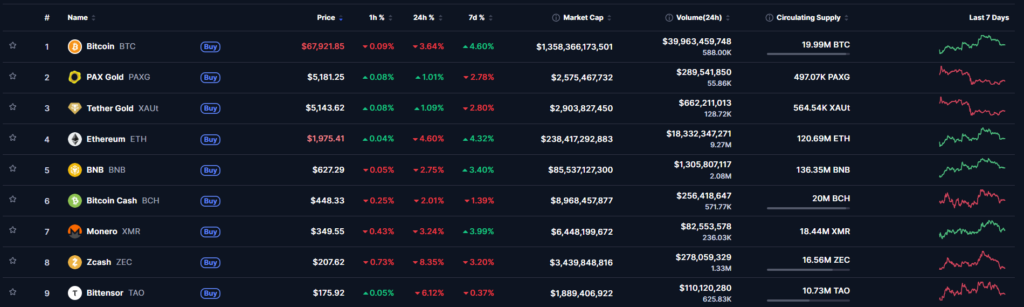
Over the past 24 hours, the broader crypto market has experienced increased selling pressure across major assets. Bitcoin has slipped from recent highs, while Ethereum and altcoins have followed with sharper percentage declines.
Such synchronized movement typically signals macro-driven sentiment shifts rather than isolated project-specific issues. When risk appetite falls across global markets, crypto assets often react quickly due to their higher volatility profile.
Market analysts note that crypto downturns frequently coincide with broader financial market uncertainty, including interest-rate expectations and geopolitical developments.

Key Reasons Behind the Latest Crypto Market Drop
1. Macroeconomic Pressure and Risk-Off Sentiment
One of the most common triggers for crypto market declines is macroeconomic uncertainty. When investors anticipate tighter monetary policy or economic instability, they often reduce exposure to high-risk assets such as cryptocurrencies.
Recent reports suggest that global market volatility linked to geopolitical tensions and trade policy concerns contributed to declines in digital assets, including Bitcoin and Solana. This risk-off environment tends to push capital toward traditional safe-haven assets like bonds or gold.
As a result, crypto markets often experience rapid sell-offs when macro sentiment shifts suddenly.
2. ETF Outflows and Institutional Profit-Taking
Institutional capital has become a major driver of crypto price movements since the introduction of spot cryptocurrency ETFs. While strong ETF inflows can support market rallies, large outflows may trigger the opposite effect.
Recent market data shows that some crypto ETFs experienced significant withdrawals during the latest downturn, reflecting profit-taking or cautious positioning among institutional investors. Financial reports have highlighted periods where hundreds of millions of dollars exited major Bitcoin ETFs in a single day during market corrections.
When ETF investors redeem shares, funds may sell portions of their crypto holdings to meet redemptions, which can increase selling pressure in the broader market.
Technical Factors Behind the Sell-Off
Beyond fundamentals and news events, the latest crypto decline also has clear technical explanations.
Resistance Rejection
Many major cryptocurrencies recently approached strong resistance levels on the chart. When prices fail to break through these zones, traders often take profits, triggering short-term pullbacks.
For example:
- Bitcoin struggled to sustain moves above key psychological resistance levels.
- Ethereum faced strong selling pressure near recent highs.
- Several altcoins showed declining momentum after extended rallies.
These rejections often lead to cascading liquidations in leveraged derivatives markets.
Liquidation Cascades
Crypto derivatives markets play a large role in accelerating price movements. When leveraged traders are forced to close positions due to falling prices, automated liquidations can intensify downward momentum.
Large liquidation events frequently occur during market corrections, causing sharp but short-lived price drops.
The Bullish Perspective: Why the Decline May Be Temporary
Despite the current sell-off, some analysts view the drop as a healthy correction within a broader market cycle.
Several supportive factors remain in place:
- Growing institutional adoption
- Continued blockchain innovation
- Increasing regulatory clarity in some regions
- Expanding crypto infrastructure
Historically, crypto markets often experience multiple corrections during longer-term bullish cycles.
Bearish Risks Still in Play
However, traders should also remain aware of potential downside risks.
These include:
- Continued ETF outflows
- Prolonged macroeconomic uncertainty
- Stronger regulatory scrutiny
- Rising Bitcoin dominance reducing altcoin liquidity
If these pressures persist, the market could experience extended consolidation before the next major rally.
Final Outlook
The latest crypto market decline appears to be driven by a combination of macroeconomic pressure, institutional capital flows, and technical resistance levels. While the drop has raised short-term concerns among traders, such corrections are common in highly volatile markets like cryptocurrency.
Whether the current sell-off evolves into a deeper downturn or simply a temporary pullback will largely depend on macro conditions, ETF flow trends, and investor sentiment in the coming weeks.
For now, the market remains in a high-volatility environment where both risks and opportunities continue to coexist.