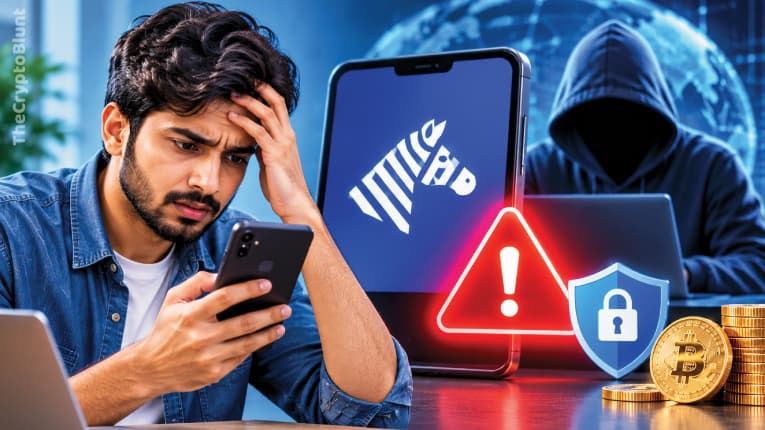
ZebPay has alerted its users after a cyber incident at its messaging partner, MoEngage, exposed certain personal details and account activity logs. Despite the unauthorized access to this information, the crypto exchange assured clients that their funds remain completely secure.
ZebPay Confirms Security Incident Originated at MoEngage#
In a November 21 advisory sent to impacted users, ZebPay explained that MoEngage had reported a security breach where an unknown intruder used stolen credentials to infiltrate its cloud infrastructure and steal records belonging to various clients, including the exchange’s account holders.
The crypto trading platform relies on MoEngage to handle user outreach and coordinate how messages are delivered across its network.
ZebPay confirmed that the security incident remained limited strictly to MoEngage’s network. According to the advisory, the exchange’s internal servers, databases, wallets, and trading engines experienced zero disruption and kept functioning smoothly. Furthermore, the platform detected no suspicious login behavior on the affected user’s profile, reassuring the recipient that all their cash balances and digital assets were safely protected.
This announcement came right after MoEngage sent an email to clients on November 20, which The Economic Times noted had linked the breach to stolen credentials at one of MoEngage’s third-party vendors. Sources close to the situation informed the publication that several companies lost access to the MoEngage platform for almost seven days, though service was finally restored for a portion of those users on November 19.
During an earlier announcement on November 11, the trading platform noted that a technical glitch at one of its banking partners had delayed Indian rupee payouts. According to prior coverage by , ZebPay had also temporarily halted digital asset withdrawals to perform system maintenance, though incoming crypto transfers remained active despite warnings that processing times might be extended.
MoEngage Breach Exposed Contact Details and User Activity#
ZebPay categorized the compromised records as basic personal identifiers, contact information, online and device metadata, along with recent user account activity. The advisory outlined these general data types for impacted clients, though the specific individual files were not itemized.
MoEngage’s data processing policy outlines email addresses, device metadata, application preferences, and event logs as standard information that businesses may upload. According to the documentation, organizations rely on these records to segment user groups and ensure targeted notifications are delivered across multiple communication channels.
The trading platform stated that it is actively tracking the situation, strengthening its internal safeguards, and has notified the relevant regulatory authorities about the breach. In its advisory, the company primarily warned users against phishing scams, noting that fraudulent callers or senders might reference personal information or past transaction history so their messages are mistaken for official ZebPay outreach.
Stay in the loop
Get crypto news before the market moves
Join thousands of investors who read our daily briefing.
No spam. Unsubscribe anytime.
Hackers Use Exchange Support Data to Target Crypto Holders#
Back in May 2025, American crypto exchange Coinbase revealed that bad actors had bribed offshore support agents to extract data belonging to under 1% of its monthly active traders. According to the platform, these attackers collected user contact and profile details so their fraudulent outreach would be believed, allowing them to trick victims into transferring digital assets.
Coinbase flatly rejected a $20 million extortion demand, instead announcing a matching bounty for tips that ensure the perpetrators are arrested and convicted.
The American crypto platform confirmed that user login credentials and company wallets remained completely untouched during the Coinbase security incident. It promised to compensate traders who fell victim to the scammers’ transfer schemes, while rolling out stricter identity verification steps whenever sizable withdrawals are requested from flagged profiles.
In April 2026, a distinct extortion scheme targeting Kraken emerged right after two breaches involving unauthorized snooping by individuals connected to its support teams. The crypto exchange noted that minor details across roughly 2,000 user profiles were compromised, adding that it had alerted impacted clients and immediately terminated system permissions for the staff responsible.
ZebPay Urges Users to Reject Requests for Verification Codes or Transfers#
In its November 21 advisory, ZebPay reminded users that company representatives will never request passwords, one-time PINs, two-factor authentication codes, or wallet recovery phrases. The trading platform also stressed that its team will never instruct clients to download remote-access software or ensure that funds are transferred to any external wallet or bank account.
Per its official support manual, traders looking to verify any outreach from the platform can navigate to the Help menu inside the ZebPay application and tap Support Centre to initiate a live chat. The company instructs users submitting a ticket to enter the exact email address linked to their registered profile, while its security guidelines note that suspicious messages should be reported directly to phishing@zebpay.com.
The advisory instructed Indian users to flag any suspected scams by dialing the National Cyber Crime Helpline at 1930, ensuring formal complaints are filed via the official cybercrime portal.
Official guidelines for reporting financial cybercrime in Delhi specify that callers must keep the transaction ID, date, and amount ready beforehand. According to these instructions, victims are issued an acknowledgment number that lets them finalize their formal complaint online.