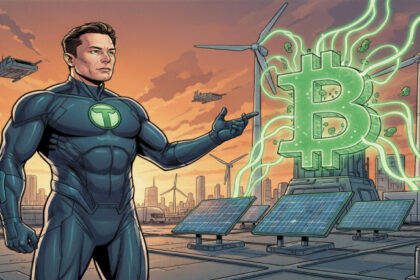
Elon Musk Questions if Bitcoin Is Now Sustainable Enough for Tesla’s Return
It is reported by data sources that 52% of Bitcoin mining is…

Tesla is not merely an automotive company; it is an engineering powerhouse dedicated to accelerating the world’s transition to sustainable energy. It shattered the status quo with its revolutionary electric vehicles (EVs), proving that electric cars could surpass their gasoline counterparts in performance, safety, and desirability. From the luxury Model S to the mass-market Model 3, its lineup is supported by a proprietary global Supercharger network that made long-distance EV travel practical.
Beyond its four-wheeled marvels, Tesla’s ecosystem extends into clean energy generation and storage through its Solar Roof and Powerwall battery systems for homes, and the utility-scale Megapacks that stabilize power grids. At its core, Tesla is a technology and AI company, relentlessly pushing the boundaries of battery science, autonomous driving with its Autopilot software, and manufacturing through innovations like the Gigafactories. It’s even venturing into humanoid robotics with Optimus. More than a brand, Tesla has become a symbol of a technologically optimistic, sustainable future, fundamentally reshaping two of the world’s largest industries in the process. It continues to challenge conventions, forcing legacy players to adapt or be left behind in the electric revolution it ignited.
It is reported by data sources that 52% of Bitcoin mining is…